Wednesday Wednesday, 30 September 2026
This roundtable brings together Technical Directors from Unreal Engine teams and Epic Games team members for a candid discussion on production challenges, workflows, and what’s next for the engine.
This is a closed-door session. If you would like to participate, please email ue-anz-sea@epicgames.com with your name, job title and company.
Unity Dev Day is back for 2026!
Join us for a day full of games-focused topics featuring talks by a host of Unity experts. You'll also have the chance to network with fellow developers, meet educators and industry leaders, and connect with the Unity community.
Find out more and register using the link below.
Supported by host - BNZ
Small teams often assume creative alignment happens naturally. Everyone talks all the time, everyone knows the game, everyone is close to the work so surely the creative vision is shared by osmosis. In practice, this is where a lot of drift begins.
This masterclass reframes creative direction as a lightweight decision-making system. Rather than treating creative vision as a showpiece document, we will explore how to create a well-worn creative vision: one that clarifies thinking, surfaces hidden misalignment, guides tradeoffs, supports autonomy, and helps the team make better decisions under pressure.
Through guided exercises, attendees will learn how to translate inspiration, gut feel, and high-level intent into practical creative anchors. We will look at how to define the shape of a project: what the game is promising, what must stay true as the project changes, what can flex, and what would make the game stop feeling like itself. From there, we will turn abstract creative intent into usable tools, including project values, player fantasy, experience loops, and decision lenses.
In this Masterclass, Epic Games' Chris Murphy demonstrates, live and in depth, how to build advanced Procedural implementations including procedural forests, spline-based walls, doorway placement, clutter, PCG Grammar and procedural world elements.
Attendees will follow detailed descriptions and explanations as each piece is built, leaving with a practical framework for designing bespoke procedural tools tailored to their own project's procedural generation needs. As the PCG framework in Unreal is self-contained, this Masterclass welcomes Unreal Engine newcomers and advanced developers alike to join in and learn how best to cut time and effort out of their workload.
This masterclass takes a deceptively simple concept, a campfire, and uses it to demonstrate a complete, repeatable VFX workflow and its implementation in UE5 Niagara system, moving from first design principles all the way to a gameplay-ready effect. Along the way, we'll look at professional breakdowns of game VFX and dive into custom scripting for more advanced behaviours.
At first we focused on visual decomposition. Participants are shown a complex VFX (a MOBA-style ability effect) and asked to reverse engineer its structure and composition (how many emitters, what's the initial burst versus the sustain versus the decay, etc). We'll then look at professional studio-level breakdowns from other games, discussing the actual setups and decisions behind them, to show how the same thinking scales. From there, we move into composition. Now that participants can see the parts, we build a bonfire from scratch. We'll discuss behaviours, requirements and expectations around the VFX then put it into practice, implementing it using Niagara's hierarchy and its namespace system in practice.
With the bonfire built, we open to a hands-on “playground” to explore External Data, User Parameters, Niagara Parameter Collections and Engine data. Participants can shout-out what values or behaviours they would like to see changed, or do it themselves. The bonfire becomes the basis for thinking about VFX on a gameplay level. We then explore what could branch from that VFX when we build an on-character burn effect using Niagara's Scratch Pad. The goal is to expand the possibilities and introduce participants to Scratch Pad and how to identify problems and solutions requiring it.
The final section turns optimization from a “boring” checklist of tips into a live, verifiable exercise. Using the same bonfire, we walk through draw call count, LOD, effect types, etc, then explore what changes if there are a bunch of these in a level. We'll discuss and test the cost impact of every change live using Niagara's own debug tools.
Navigators of the future : Wave finders of today!
For thousands of years, the ancestors of Pasifika and Māori navigated the largest oceans on earth, without the use of tools like compasses and maps. Instead, they used stars, ocean swells, wind patterns and shared knowledge allowed them to find new islands and build thriving communities.
The practice of Wayfinding was built on core values: courage, observation, teachings passed down from generation to generation, all while working together.
For Pasifika and Māori, games and tech have become tools for cultural expression and economic opportunity. Just like our Tupuna used navigation to assert identity and connection.
Today video games, streaming, and digital platforms are used to tell their stories, build community, and create pathways for the next generation.
The ocean has changed, but the navigator mindset remains.
This gathering is an opportunity for Pasifika and Māori game developers to connect, build relationships, and explore the power of storytelling through games.
You will have an opportunity to RSVP at the beginning of September.
Connect with the women shaping our worlds across game development.
We welcome women, including cis and trans women, as well as anyone who identifies as a woman, interested in game development to join us. 🫶
Meet peers, share experiences, spark new collaborations, and celebrate the creativity and leadership that continue to shape the future of our industry.
Join us at Sunset Bar at the Sudima Hotel, 10th floor, Nelson Street (right behind NZICC).
Thanks to our event sponsor Balancing Monkey Games! 🫶
RSVP via the event tile of the NZGDC Event App.
Thursday Thursday, 1 October 2026
The NZGDA AI Hui is a structured, facilitated discussion bringing 200 of Aotearoa's game developers together to confront the most pressing questions surrounding AI in our industry head on.
Twenty round tables - two hundred participants - one unified voice.
Registrations open Friday 28th August 2026 on a first come, first served basis. Do not miss your place in the room!
Invitation only - more details coming soon.
We've intentionally left this break unscheduled to allow you a chance to explore the local community.
We encourage you to visit nearby eateries, support local businesses, and enjoy the unique food (and shopping) scene surrounding the conference venue. Enjoy!
This opening address will celebrate the people and community that bring us together and set the tone for a few days of connection, learning and shared celebration. We look forward to welcoming everyone and making the most of the opportunity to connect, learn and celebrate together.
The Pioneers of Play is an NZGDA initiative that honours the commitment and dedication of long-standing professionals and studios within the gaming industry, celebrating milestones of 5, 10, 15, and 20+ years of service.
By recognising these individuals’ contributions over the years, Pioneers of Play highlights the passion, resilience, and innovation that have driven the industry forward.
This celebration pays tribute to those who have shaped and inspired the games community, acknowledging their role in building a dynamic and enduring industry for future generations.
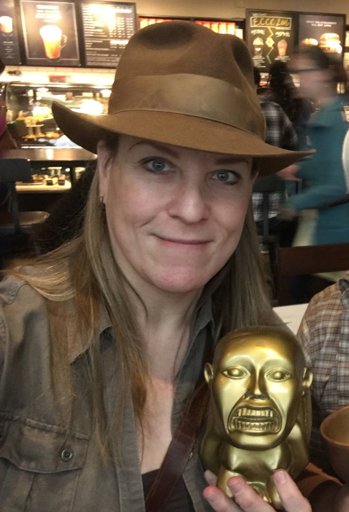
For more than 33 years, Kate Edwards has helped influence over 320 video games, from historical civilizations and science-fiction universes to contemporary cities and legendary adventures. Her journey from geographer to game creator and to the innovator of game culturalization has given her a unique perspective on what makes a world feel authentic - and why the worlds we create have consequences far beyond the game itself. In this keynote, Kate shares lessons and stories from an unconventional career spent working across genres, cultures, and generations of players. She’ll explore how geography, history, identity, and cultural context influence every aspect of worldbuilding, often shaping how players interpret a game's intent in ways its creators never anticipated.
She’ll also introduce practical concepts that can help developers build richer experiences, anticipate cultural friction, and connect with audiences around the world without compromising creative intent. Our game worlds don't exist in isolation; they become cultural artifacts that reflect our worldviews as creators and shape how millions of players understand people, places, and each other. As our medium continues to grow in cultural significance, the worlds we create matter more than ever.
At Te Tumu, tikanga (cultural customs) are woven into how we welcome, host and care for our manuhiri (guests). It is not an add-on, but a principle that shapes our conference experience from the moment our event begins. This formal Māori welcoming ceremony, called a pōwhiri, acknowledges visitors, establishes relationships, and creates a shared space by removing spiritual restrictions (tapu) before moving into the purpose of the gathering.
We look forward to sharing this experience with you as we welcome you to the New Zealand Game Developers Conference.
Join us for afternoon tea and take a moment to recharge after the conference opening. Enjoy a refreshment, connect with fellow attendees, and take the opportunity to meet new people before the first sessions get underway.
Video games are curated experiences situated both in the physical and digital world. Our immersion in a game is influenced by not only what is directly on the screen, but our real world experience. In this talk Jennifer goes through their masters project findings, laying out specific wayfinding principals and techniques that aid the game development process. Utilizing wayfinding principals and practices can help to better understand the game world, narrative, user interface and user experience. Wayfinding is a term given to many forms of navigation and spatial problem solving. From the urban designs of signs, roads, maps and buildings to our inherent connection with nature; utilizing the stars, plants and landmarks around us. Integrating wayfinding principals and techniques with game design, allows the game designer to utilize a user's real world spatial problem solving skills to navigate the game, thus aiding their play experience.
In the real world people learn the ‘language’ of the signs around them. They know that a green sign with a stick man running means exit. A dirt track through a park may mean a quicker route. All around us is a designed system that helps us know where we are and how to get where we want to go. In video games there is a similar system, users learn the ‘language’ of games. They know that items along a path lead to the next area. That a glowing dot on a map means there’s a quest or battle. Jennifer suggests that merging these two design systems will benefit the player experience and the game development process.
This talk sits within the NZGDC themes of 'Worlds that hold together' It encourages attendees to look at their game in a new light. Helping them to understand what queues - narratively, mechanically and physically - they are giving their players. Integrating wayfinding principles and practices also helps understand world building as signs, symbols and systems are heavily influenced by history, culture and the people who use them. This talk aims to give attendees a framework to base navigation decisions off of. To know when to break the 'rules' and when to follow them.

In this talk, Kasey explores what it really means to operate in fast-moving, high-pressure creative environments where certainty is rare and decisions must be made in real time.
Drawing on experience in both aviation and production leadership, she reflects on how “flying by the seat of your pants” is often not a lack of structure, but a skill in navigating uncertainty with clarity and control.
Over the past few years, Blender has evolved from a capable free tool into a serious contender for full-scale game art production. But beyond feature lists and release notes, a key question remains: can Blender truly hold up in a real production environment? This session explores that question through practical experience, focusing on what it actually means to ship game-ready assets using Blender as a core part of the pipeline.
Special attention is given to newer systems such as Geometry Nodes, the Asset Browser, and pipeline automation techniques that can significantly reduce repetitive work and improve consistency across teams.
This session is aimed at game artists, technical artists, and developers who are interested in practical, production-focused approaches to using Blender beyond hobbyist workflows.

In an industry often focused on what happens on screen, it can be easy to overlook the impact of the off-screen, IRL experiences: the events that bring disciplines together, the collaborations that bridge cultures and regions, and the intentional moments that foster connection, trust, and belonging across creative communities.Some of the most meaningful worlds in the games industry are built outside the game itself, through the experiences that connect people to each other, to creative work, and to possibility.
Drawing from her time spent working behind-the-scenes on community experiences, Mia Ginaé Watkins explores how experience design can shape not only how people engage with games, but how they engage with each other. Through a series of real-world case studies, Mia reflects on how thoughtfully crafted experiences can create lasting creative ecosystems in the gaming industry that extend far beyond a single event or deliverable.
This talk invites audiences to consider events as a form of world building in their own right: one capable of strengthening creative communities, elevating underrepresented disciplines, fostering global collaboration, and shaping the emotional fabric of the industry itself.
At its core, this talk is a reflection on intentional creation, and the quiet but lasting ways experiences can influence the people, relationships, and futures that shape our industry.

Many indie developers want to enter new markets, but they often do not have enough budget or publisher support to test whether their game will work there. Markets like China can also seem difficult and expensive to enter. Because of this, some teams avoid these markets or make decisions without enough real player feedback.
In this talk, I will share a low-cost, community-driven way to test new markets, based on my experience organizing game showcases between China and Oceania through IGDA networks. Instead of relying on paid ads or expensive research, developers can work with local game communities and player groups to run playtests and collect direct feedback.
I will explain how to find local communities, organize simple playtesting sessions, and use player feedback to improve both the game and its market strategy. This can help developers understand cultural differences, player expectations, and whether a game fits a market. For indie developers and small teams, it is a practical way to test, learn, and improve before making bigger decisions.

Most multiplayer AR games assume everyone is standing in the same park. But what happens when your players are on opposite sides of the country, or the world, and you still want them to feel like they're sharing one world?
This talk dives into the design, development, and testing of multiplayer AR games built around locations, connecting remote players in real time. This includes remote AR hide and seek experiences and shared AR environments that visualise distant locations. Drawing on a PhD research project and several published studies, I'll walk through what worked, what didn't, and what surprised us along the way.
The core problem is that in most AR games today, AR is a visual novelty embedded onto the gameplay rather than a system that actually shapes it. This talk argues and demonstrates that AR can do more. It can drive player movement, strategy, immersion, and social interaction as a genuine gameplay mechanic.
You will leave with a clearer picture of how different AR design choices affect spatial presence, trust, and decision-making across distance. The talk shares real examples of mechanics that worked and design decisions that didn't, along with lessons on how players actually interpret and navigate remote spaces during play.
This talk is built for game designers, XR developers, UX researchers, gameplay programmers, students, and anyone interested in designing multiplayer experiences that connect people across distance in genuinely human ways.
Play is learning, and to learn to play your game players likely will need some support. This applies whether they are just new to your game, to your games genre, the platform you game is on, or to gaming in general.
This talk will go into the challenges that players can face when picking up a game and how the psychology of learning and established user experience principles can be applied in practical ways to help realise your design intent for your players and to make your game an awesome experience.
Chloë Elmore will speak on her experience as a voice actor working with many game titles from indie games with micro-budgets and as the leads in AAA games. She will share some horror stories that you can learn from and avoid as well as best pracitce that help the professionals on both sides of the glass. The do’s and don'ts of voice acting in video games, from casting, scripts, directing sessions, billing and more. Then she'll open it up for 30 minutes for YOUR questions! Throw her any questions!
Game dev is full of shifting terrain: evolving markets, unpredictable players, half-built systems that break when you breathe on them. We can grit our teeth and react as plans go sideways… or we can embrace uncertainty and weave it into our approach.
In this talk, I’ll share how teams and I used a hypothesis-driven game design approach to move fast, stay aligned, and deliver work we’re proud of without chasing the illusion of “perfect” or feeling dizzied by pivots.
The key? Shifting our mindset from “what do we need to build first?” to “what do we need to learn first?”, choosing the quickest (and cheapest) prototyping path to that lesson, and adopting habits that empower the team to know how to chart the path of clear and confident iteration.
I’ll walk through how this played out on Serenity’s Spa, a dash-style time management game that went from non-existent to 15 polished, market-testable levels in just three months. But that’s just one example. The core of this talk is the method—and how you can make it your own.
You’ll leave with practical tools to: • Break down fuzzy ideas into clear, testable design hypotheses • Match prototyping fidelity to the experiment, your team’s bandwidth and risk profile • Set up feedback loops that accelerate iteration and build team trust and resilience
If you want to lead with proactivity instead of reactivity, build fast without burning out, and create space for your team to do their best thinking—this one’s for you.
Let’s stop bracing for chaos. Let’s roll with it on purpose.
Join Paige Wilson, and Corey Warning as they answer questions about what Aggro Crab plans to do differently as publishers and SELF-publishers of their own games. Moderated by Amila Nuhodzic (Auckland Makes Games), this panel discusses the publishing of Subway Midnight, and what plans are in place to publish more games in the future. There’ll also be conversation about what brought them to the decision of publishing indie games on the side while still developing their own titles.
They will discuss the strengths of the studio such as their existing Marketing strategy to highlight these games, all the way to contracts designed to support developers through productions and post-release.
Running a playtest can feel like being in the trenches - chaotic, demoralising, and feeling under fire. Worse yet is the feeling of playtesting in circles with no clear progress and nothing to show for it but wasted time. As indie devs, ineffective playtests can mean the difference between shipping on time or not shipping at all, so it's time we gave our feedback some feedback, and made our playtesting purposeful.
Join Senior Game Designer Penelope Murphy (The Three Thousands) as she digs into what's going wrong in our playtests and the strategies to turn them from something we just survive, into something we actively thrive in.
Topics include: the meaningful difference between personal feedback and game feedback, identifying the playtesting ‘ask’, playtesting best practices, moderating playtests, avoiding design drift in playtests.
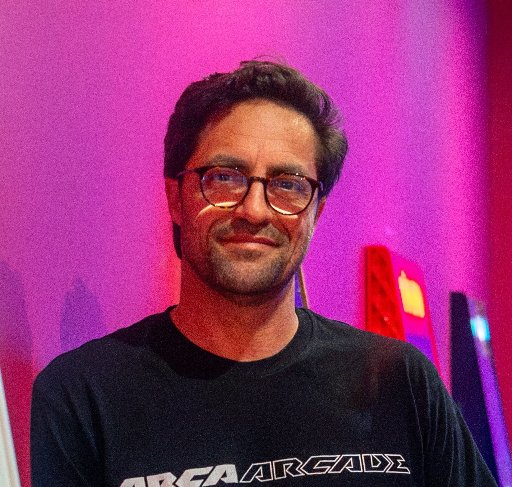
Arcades were once social spaces of experimentation, competition, spectacle, and technological wonder. While much of gaming culture has shifted into online and domestic spaces, the physical arcade continues to hold a powerful cultural and creative legacy that still influences contemporary game design, interaction design, and public engagement. In this talk, Preston McNeil explores how arcade culture can be reinterpreted through contemporary exhibition practice, interactive art, and independent game development.
Drawing from the development of *Arca Arcade: Round One*, McNeil discusses the evolution of the project from a passion for retro gaming into a touring interactive exhibition that has engaged more than 65,000 visitors across New Zealand and Australia. The presentation examines how over 20 years working as a digital creative, animator, and art director informed the visual language, user experience, and storytelling methodologies behind the project’s arcade cabinet designs and public programming.
The talk also explores the practical realities of creating arcade-based experiences in a contemporary context — including hardware fabrication, exhibition logistics and design process. McNeil will share how the project uses competitive *Street Fighter* tournaments, “Geek Speak” artist talks, and “Control Freak” build-your-own joystick workshops to actively cultivate community participation and revive the social dynamics that once defined arcade spaces.
Alongside preserving arcade culture, the presentation will also discuss the development of original arcade-style games inspired by pūrākau and traditional Māori narratives. McNeil reflects on the opportunities and challenges of adapting culturally grounded storytelling into classic arcade formats, and how nostalgic gaming mechanics can become vehicles for contemporary creative expression and local narrative identity.
Rather than treating arcade history as nostalgia alone, this talk positions the arcade as an enduring framework for thinking about public play, physical interaction, community engagement, and the future of independent game experiences.

Due to increased scope and lessons learned from The Way of Water, Avatar: Fire and Ash's production required many new workflows and an enhanced toolset. Using three sequences to illustrate different challenges faced by the team, Stephen Clee, Animation Supervisor and Sam Cole, Visual Effects Supervisor, walk through Wētā FX's process from turnover to final. They show what’s unique about the Avatar series, what they learned from Way of Water, what was changed for Fire and Ash and why the Avatar team does things the way they do. Highlighting everything from capturing live-action performance in river water, simulating complex states of water such as river rapids, how they take concept designs and turn them into animatable creatures, new systems for simulating muscles and skin in CG characters, how they integrate CG closely with live-action stereo photography, and how they preserve as much plate and performance as possible.
Entering Avatar: Fire and Ash with a clear understanding of which workflows required refinement to manage the scope and complexity of the new film, Steve and Sam use challenging sequences from Fire and Ash to peek behind the curtain at Weta FX's processes, and workflows unique to the Avatar series, illustrating the life of a shot from turnover to final QC. With numerous full CG shots inter-cut with live-action plates, the river rapids sequence highlights advancements in our water workflows as well as complex compositing integration and character work. Starting from accurate riverbed geometry, the water was simulated from the ground up to match the photography, with refinement spanning primary flow, aeration, bubbles, and foam. For the squid-like Tsyong, Steve and Sam then take the audience through the process of creating a new Pandoran creature from concept to screen. The Tsyong’s violent interaction with the soldiers introduced unique challenges in creature deformation, water simulation, and dynamic shading.
Spider’s live-action integration with digital characters required animation performances that felt natural while fitting precisely within the tight constraints imposed by stereo photography. This section explores the relationship between performance, spatial restrictions, targeted muscle reference shoots and BodyOpt, a creature muscle simulation system combining animator-directed control with automated activation. This discussion highlights how these considerations led to shot-specific solutions rather than a one-size-fits-all approach.
This talk explores the practical realities of building and running a fully-remote game studio from day one, and how remote-native studios fundamentally operate differently from traditional onsite teams. Through real examples and lessons learned while building Space Rock Games, the session will cover both the advantages and challenges of fully-remote development, along with the operational systems and production practices required to make distributed game development work long term.
Topics include async communication, maintaining visibility across distributed teams, the growing importance of documentation, hiring and onboarding remotely, balancing flexibility with structure through core hours, and maintaining team cohesion without a physical office. The talk will also discuss some of the unexpected benefits of fully-remote development, including access to wider talent pools, improved flexibility, easier collaboration across studios and timezones, and the ability to build teams beyond geographic limitations.
Alongside these benefits, the session will explore some of the challenges remote-native studios face, including isolation, work-life boundary issues, communication pitfalls, and how traditional assumptions around operational security and studio infrastructure often change in remote-first environments.
The talk will additionally explore how remote-native studios naturally approach external collaboration differently, and why teams already operating across distributed environments can often integrate more effectively with external partners and co-development teams.
Rather than presenting fully-remote development as a one-size-fits-all solution, the session aims to provide practical, experience-driven insight into what changes when remote work becomes foundational to how a studio is designed to operate.
Join Jeff Royal and the team from Unity to ask them anything!
Got a build issue? A rendering question? Something you've always wanted to ask the team behind the engine? Now's your moment.
UX isn't just about the player UI, it shapes everything the end-user experiences and interacts with in a game whether we realise it or not.
‘Consistency and Standards’ is one of the key usability principles in UX Design, and this talk will show you how it can improve your discipline. We'll break down what the principle really means, then look at how it can be applied across a range of contexts with examples for each.
Key topics will include: control schemes, attack animations, debug menus, and team alignment.
Ask any developer on an Unreal team what slows them down and you'll get the same answers. Waiting on builds. Syncing the wrong binaries. Mysterious editor crashes after a bad merge. Spending the first hour of the day just getting back to where you were yesterday. None of these are Unreal problems — they're workflow problems, and they're almost entirely avoidable. Epic built an entire ecosystem of tooling to solve exactly this for themselves while developing Fortnite and Unreal Engine, and then they open-sourced it. Perforce, Horde, UBA, UGS, Robomerge, Zen Server — these aren't separate products you bolt together, they're a coherent pipeline designed to work as a system. When that system is running well, developers spend their day making things instead of fighting their environment. When it isn't, you lose hours before lunch. This session walks through what Epic calls "The Epic Way": a production-grade studio workflow that scales from a two-person indie team up to hundreds of developers on a shared codebase. We'll cover what each piece of the stack does, why it exists, and how they connect. More importantly, we'll look at what the developer experience actually feels like at each stage — the morning sync, the fast compile, the clean merge, the build badge that tells you whether last night's commit is safe to pull. We'll also be honest about the setup investment each tool requires, what you can get running in an afternoon and what will cost you a week if you go in unprepared. Not every studio needs the full stack on day one, and this talk will help you figure out which parts to reach for first based on where your team's pain actually lives.
Designing games around emotionally reactive characters raises design questions that existing game development frameworks only partially address. When character emotion and interaction is a central experience to a game, decisions about mechanics, pacing, narrative structure, and interaction need to be approached differently to make use of that focus. Approaching these decisions in a structured, theoretically grounded way is an area where there is real room for new knowledge and expanded practice.
This talk presents research from a PhD investigation into how fundamental game design frameworks can be extended to account for emotionally reactive characters as systemic design elements. The core argument is that when a player perceives a character as having genuine emotional responses to their actions, the way a player experiences the game changes. Mechanics, pacing, and narrative structure are no longer experienced in isolation, they are interpreted through the lens of the player's relationship with the character, and designing or speaking about these games requires a more critical language.
The central novel contribution of the research is the Emotion Construction Engine; a tool (currently implemented as components in unreal engine) developed as part of this research grounded in psychology constructionist emotion theory and computational models of emotion from cognitive science. Rather than modelling character emotional reactions as triggered responses to game events, the ECE models them as constructed from the ongoing contextual emotional affordances of the game in combination with character archetypes to modulate the processing of those emotional affordances. This gives developers the ability to apply emotional processing to their game characters to allow for this unique approach to design.
The session will cover the theoretical extension of the MDA framework, the technical and design logic of the Emotion Construction Engine, and what this approach opens up for designers working with character-driven experiences. It is aimed at anyone who is developing character centric games where the relationship between the player and the game characters is central to the experience in meaningful ways. That includes narrative designers, systems designers, and anyone working in character and interaction design. Game design has always been about setting up rules and systems to allow for player experience. This research argues that when emotionally reactive characters are central to that experience, we need a more complete set of tools for doing that work deliberately and with theoretical grounding.
Every game studio runs retrospectives. We carve out the time, fill the sticky notes, surface the hard truths, celebrate the wins, and then... the meeting ends. For most teams, what happens next is well understood: action items get documented, the backlog or charter or pipeline gets updated, and the next sprint gets planned. That part of the retro loop, the team-level follow-through, usually works. Teams are good at picking up what's in their control and folding it into the next cycle. But not every retro note belongs to the team. Some insights are bigger than a sprint. They touch resourcing, studio culture, project scoping, or ways of working that cut across multiple teams and projects. These notes are relevant to producers, managers, and senior leadership, and they don't have a natural home in a sprint backlog. This talk is about what happens to those notes. Drawing on the post-retrospective workflow developed and refined at CerebralFix, a game development studio based in Christchurch, this session walks through the system built to catch the things that fall outside the team's immediate control: how studio-level insights get captured and surfaced, who reviews them, how actions get created and assigned, and how the studio reports back to the whole team on progress. Think of it as the link between a team that speaks up and a studio that follows through. Where does a producer or studio manager go to check the status of their action items from eight retros ago? Six months on, does anyone know what happened to the notes that went to Senior Leadership? This talk answers those questions with a real, working system, unglamorous as it is, built on a spreadsheet, a bi-weekly meeting, and a quarterly report shared at morning tea.
Building a post-retro flow for the wider organisation is a small, practical act of intentional studio-making: choosing to treat the people in the room as worth following up on.
Attendees will see a real working system, warts and all, from a studio that is still iterating on it. The goal is not to present a perfect framework, but to give producers, studio managers, and team leads something concrete to take back and adapt.
Most indie developers know they need to market their game, but few of us got into game development because we love marketing. As a programmer who'd rather be solving problems than selling, I avoided it for years, until I started a YouTube Devlog series and realised it had quietly become the single most valuable thing I do for my studio.
Most of us build a game and hope a publisher will swoop in to rescue us from our marketing woes, or that some massive content creator will pick it up and start playing it. What if you flipped that on its head and became that content creator yourself?
This talk is about how I used YouTube to build an audience, fund a game, and create a community I can carry into every project I make from here on. I'll share the numbers behind my channel @IncandescentGames which pays me to show adverts for my game PlanetSmith (a nice change I'm sure you will agree), and how you can convert those views into wishlists, a crowdfunding campaign and eventually sales. Crucially, I'll also walk through the practical side: the do's and don'ts of launching a brand new channel, how to read your analytics to spot what's working even with a handful of views, and how to double down once you start to gain traction.
But this isn't a talk about chasing algorithms or producing slick trailers. The biggest lesson I've learned is that audiences don't latch onto faceless games, they latch onto stories. They want to follow the messy, real process of someone building something they care about. A polished trailer can't compete with a genuine devlog about a problem you're stuck on, why it matters, and how you solved it. I'll walk through what's worked for me, what hasn't, and why traditional trailers and announcement videos consistently underperform storytelling.
I'll also cover the part most marketing advice misses: what happens after you've built an audience. The community you grow around one game becomes the foundation for every game after it. These are people who are already on your team. They wishlist day one, defend your work, and give you more high-quality feedback than you'll know what to do with. For a solo developer or small studio, that's a competitive advantage that's hard to overstate.
If you're a developer who's intimidated by marketing, or completely lost trying to market a game without a budget, this talk is for you. I'm not a marketing expert; I'm a programmer who likes maths and problems. But being a solo developer means wearing every hat, and I've found that making yourself part of the story is the most honest, sustainable way to do this. It also happens to work.
Ever wonder what goes on inside the process of Gameplay Design on Action Role-Playing Games (ARPGs) like Path of Exile? Could one make an ARPG without Swords? How closely do you feel similar experiences colour your expectations of features you know are coming? Explore all these topics and more with this presentation, in which I’ll be speaking on the process – from start to finish – of creating Path of Exile’s 2 latest character class: the Duelist; and the addition of Swords to a game lacking proper slicing tools.
We’ll speak on a fuller production process: how gameplay designers coordinate across many disciplines to build a character class – not from the ground up, but on the foundations of an already-complex game; what goes into brainstorming, iterating, playtesting, and finalising a new class; and how designers can better manage the features they own.
We’ll sharpen our design process: digging into the value of novelty, the temptation to design new mechanics without consideration for the rest of the existing game, how we brainstorm ideas, the importance of the willingness to murder your own creations (or fight for their continued existence), and how to balance player expectations with the need for unified game direction?
How do we make melee combat satisfying in a game filled with spectacular magic? What do we consider when developing a new weapon type in an early-access environment with a large amount of already-existing mechanics and systems? What makes an Ascendancy appealing? We’ll get a grip on aspects of development unique to Grinding Gear Games and Path of Exile 2: Skills, Support gems, passive tree nodes, Ascendency Classes, and more. What’s up with that massive passive tree and how does a new class fit into that?
At the end, there will be an opportunity to chat a bit more casually with some Q&A about GGG, Path of Exile 2, and game design.
This presentation will go over the content developed as part of the work presented at the 2025 conference on the prevention of violent extremism in game communities. The work has two strands. The first is educational material for Years 1 to 13 that teaches students about game design techniques and why games are so engaging, then shows them how to recognise those same techniques being used by other people to manipulate their attention, identity, and commitment. The second is the design of PVEbot, a Discord moderation tool for the New Zealand game development sector built on graduated response and structured rehabilitation rather than punitive bans. The structural insight underneath both strands is that game designers and extremist recruiters are solving the same problem. Both engage the three psychological needs identified by Self-Determination Theory — Autonomy, Competence, Relatedness — which map directly onto Mana Motuhake, Pūmanawa, and Whānaungatanga. Game designers exploit those needs to create entertainment. Recruiters exploit them to create soldiers. The mechanics transfer because the psychology is the same.
Invitations are restricted to NZGDA Studio Members, NZTE Clients and International Guests, Requests for invitations can be sent to joy@nzgda.com
Join us for an evening of conversation, connection, and community as we celebrate the people, ideas, perspectives and experiences that make our industry stronger.
5.30pm - 7.30pm
BNZ Partner Centre - level 17
80 Queen Street, Auckland
This event is a welcoming space for everyone who identifies as diverse, as well as anyone who actively supports, celebrates, and champions diversity and inclusion. Come along to meet new people, share experiences, build connections, and celebrate the richness that different backgrounds and perspectives bring to our industry.
To help create a comfortable and safe environment, the event will be alcohol-free and photo-free. This provides everyone the freedom to relax, connect, and be themselves.
Whether you're looking to connect with others, hear different perspectives, find community, or simply enjoy an evening surrounded by people who value diversity, you are welcome here.
Thank you to our event sponsor, BNZ
Friday Friday, 2 October 2026

This talk explores what I’ve learned by intentionally taking on a physical card game as a learning project, and how that process has reshaped the way I approach game design.
The project is a rhythm-based, fast-paced card game built around back-and-forth “Jams,” where players perform sequences of actions to generate resources and express their playstyle. Matches are designed to be short, fluid, and highly interactive, with minimal downtime and constant engagement. Because the game is still in development, the insights shared come directly from active iteration, playtesting, and ongoing problem-solving.
A key takeaway of this talk is intentional project selection. Not all side projects are equally valuable for growth. I will break down why I chose a trading card game specifically—what design skills it stresses, and how choosing the right format can target weaknesses in your own design skillset.
Designing in a physical medium introduced constraints that immediately exposed flaws in my design habits. Without UI support or automation, every mechanic had to be clear, readable, and easy to track. Systems that relied on memory, hidden state, or excessive bookkeeping quickly became friction points. This forced a stronger focus on designing for flow, clarity, and meaningful decision-making, where every mechanic must justify its existence.
The talk will walk through concrete examples from the game’s current design—what worked, what failed, and how those failures led to better solutions. It will also explore how these lessons translate back into digital design, particularly in UI/UX clarity, prototyping discipline, and reducing unnecessary complexity.
What makes this talk different is that it doesn’t present a finished framework or postmortem. Instead, it offers a practical, in-progress perspective on using physical game design as a tool to improve your overall design skills.
This is highly relevant to NZGDC attendees, particularly game designers looking for different ways to improve their design skills or learn new ones, as well as indie developers, where strong fundamentals, fast iteration, and clear design thinking are critical. The talk focuses on building better player experiences through intentional design, using constraints as a tool to refine how we think, prototype, and create.

There are more funding options for indie games than ever before. There's a smorgasbord of grants, crowd funding, project investment, capital investment, developer-backed game funds, and publisher funding.
Newer game funds like Outersloth, and Griffin Gaming Partners are getting a lot of press, but how are they different from established funding? Aside from money, all the funding options offer different benefits, and impose different responsibilities on developers.
Let’s walk through what developers think they WANT vs what they actually NEED. When can developers apply for each funding type? Which ones can "stack" and work together? And which ones are right for newer developers vs more experienced developers?
Studios spend countless hours carving out their game's signature art style, knowing that a strong visual identity will help their game stand out in the sea of titles being released today. But so many studios (both big and small) don't give nearly as much attention to their game's MUSICAL identity. What are they missing out on, and why is it vital for you to avoid the same mistake?
When players fall in love with a video game, they often look for ways to take pieces of the fictional universes from that game back into the real world with them. But a strong, well-crafted musical soundtrack gives people a way to do so much more – it essentially hands them the power to recreate the feeling of being immersed in their favourite fictional worlds, right within the comfort of their own four walls.
That's why gamers spend so much time listening to soundtracks OUTSIDE of the games they came from. And if you're a studio looking to create meaningful and memorable experiences for your players, this presents a huge incentive to make sure your soundtrack shapes your game's world by imbuing it with a signature musical identity so distinct that when people hear it, it unmistakably reminds them of *your* game rather than someone else's.
So how can you make sure your project ends up with a well-crafted, standout "musical art style"? Join Sai as he breaks down all the different factors that go into shaping a title's musical identity, and how they're affected by your choice of composer & musicians, your musical brief, your reference material, and the creative direction you provide.
(NOTE: No prior musical knowledge/experience is needed to understand or benefit from this talk! All are welcome.)
A player's experience with your game is much like a lifetime. When it begins, the player is a newborn, full of wonder (and confusion) at the possibilities your game may contain. They try things, hit the bounds of the system, and learn, becoming a teenager - temporarily fully immersed, feeling emotional weight behind anything and everything. They join the community for your game, and hold strong opinions, and argue online.
A bit of cynicism creeps in as they become a fully formed adult human being (metaphorically speaking) when they really start to understand the limitations of your game, and what it can and can't provide. They grow older and nostalgic for what they thought your game could have been, versus what it could be. Then, finally, they begin creating content of their own - and if you offer them the space to do that, they'll do it inside your game.
This is what my talk will be about. A truly successful game is one that goes beyond being a game. It needs to be designed with purpose, cohesion, and community in mind. It needs to anticipate the stages of a player's 'lifetime' with respect to that game, and allow them to interact in the changing ways they'll seek to engage.
Per the conference themes, this is a convergence of enabling emergent behavior, designing for community, designing a cohesive experience, and designing with purpose to create a 'third space' for real-world culture to form. The games that hit big (and the games that stick with us) were not just games. They were whole arcs of personal experience. Friends, enemies, stories. We can actually design intentionally to enable these things, and doing so often includes elements outside the game itself.
For a personal example, when Starcraft first came out, I spent more time creating my own games inside it using its revolutionary map editor than I did actually playing the base game. Entire subcultures emerged through the possibilities the engine provided, and Blizzard supported this. We can zoom in on that series of seemingly simple decisions: what if Blizzard never provided the map editor? What if they didn't continually add features? What if Battle.Net never supported 'Use Map Settings' games, and you had to play the base game instead?
Now we have even more tools that are cheap, effective, and in reach. Discord communities. Youtube shorts. Streaming and content creators. How do we design with all of these elements in mind? That's what I will dig into in depth - how players actually experience games now, and how we can design for that, rather than just looking at what's in the code.
In this talk Donald discusses best practices when taking calculated risks in game development and how the team at Insomniac Games supports all disciplines shooting their shot. He covers a comprehensive list of actionable steps while giving proven examples of shipped content across the Marvel’s Spider-Man franchise. That list includes the following: embracing discomfort, weighing the cost, making a gameplan, execution, follow through and how it all comes together with images and videos from Marvel's Spider-Man and Marvel's Spider-Man: Miles Morales games.
Donald highlights the overshadowed truth that great ideas come from everyone on a team. Every game made by Insomniac Games has benefitted from game developers taking a chance and executing on an exciting idea they have, and Donald will break down how they’ve done it and continue to pioneer excellence in everything they do.
Inventory systems touch nearly every part of a game: data, gameplay, and UI. They can be done well in a dozen different ways, but when they're not, they can quickly become one of your project's most frustrating hurdles, and sometimes you don't know that until it's too late.
This talk from Epic Games’ Senior Software Engineer Cody Albert walks through building an inventory system in Unreal from the ground up: defining items as data assets, managing runtime state, and wiring it all to a responsive UI. You'll leave with a concrete understanding of an approach to inventory architecture you can use to inspire your own projects.
Join Anna Barham (NZGDA Chair) and Joy Keene (Executive Directory) to ask them anything!
Whether you're curious about what NZGDA is working on, want to know how they advocate, what's coming next, or just put them on the spot - now's your chance.
What do you need to actually know (Make env assets, you don't have to really know how to make whole entire areas by yourself, other disciplines do their part of the pipeline, but you should learn and understand all parts of the pipeline to know what's needed
Be flexible, ideas change, scope changes, things get cut, save things for a later time, it always has the potential to be used at a later stage
Use reference a lot (when making architecture look at how things are constructed properly, pillars holding parts up, height of things, placement of things, have pinterest boards of ideas and visuals from lots of different cultural elements)
Learn to get good at kitbashing (give yourself limited assets to work with and make interesting building walls/parts etc. - you generally have to work quicker than you anticipate, so knowing your assets well, and where they are helps a lot, more often than not meshes an end up with bad topology)
Learn about performance metrics, what contributes and how you can mitigate where possible (example PoE is top down, so textures are almost always at a fixed distance, pack as much together as you can onto one UV sheet, I tend to pack alpha separately (chains etc.))

How do you build your game? Do you use a series of vertical slices? Or do you go horizontal and greybox everything first, then iterate and iterate? Or do you start from a core set of features and build concentrically around that?
What really matters is making a conscious choice that’s right for your game and your team.
In this talk, I’ll explain the three key frameworks and discuss the pros and cons of each. I’ll also talk about how you can create a hybrid method that suits your unique needs.
I’ll also discuss supporting concepts such as a Degree of Done chart to help define what “done” means for different disciplines and at different stages of the game. This allows consistent expectations to be set for the entire team when you specify that an art asset should be at “DD3”.
Taking the theme "Shaping Our World" quite literally, this talk digs into the technical challenges of rendering a complex, world environment in Unity and how a small team delivered it without sacrificing visual quality.
Last year, Bloons TD 6 added a new style of gameplay through a mode called 'Legends'. Legends drops players onto a sprawling, open, hex-grid world. Thousands of tiles covered in trees, rocks and water, much of it animating. On mobile hardware targeting 60fps, that adds up fast.
This talk walks through how we built a system that takes that entire scene and renders it in a single draw call - a system that lets us say "yes" when the designers ask "Can we double the size of the map?" or "Can we add more trees?" without worrying about the performance implications. We'll give a practical insight into GPU-driven rendering in a shipping mobile game, and the real-world challenges that come with it.
This is a practical, implementation-focused talk leveraging a lot of visuals. I want it to be technical where it needs to be, but avoid lines and lines of code. Hopefully it will give an insight into the practicalities of GPU-driven rendering in a shipping mobile game, and the real-world challenges and solutions that come with it.
Both the games and film industries share the same fundamental problem: original IP is a hard sell. Funders, publishers, and distributors back what's already been proven, audiences that already exist, characters that already have fans, worlds that have already found their people. If you're walking into a conversation with something nobody has ever seen before, you're starting from the hardest possible place. The next great games are already made. Across the animation industry, thousands of hours of beloved, culturally rich, audience-tested stories sit in libraries. 2D films and mini-series that captured imaginations, whether they were celebrated at film festivals, have thousands of views on YouTube, or a million followers on TikTok or Instagram, and then stopped at the screen. For game developers, publishers, and studios, this is one of the most underutilised opportunities in the industry right now. Proven audiences mean proven IP, and in a funding environment where nobody will back you without demonstrated demand, that's not a small advantage. It's the difference between getting the greenlight and going back to the drawing board. What makes this conversation new is that the gatekeepers are finally moving. Public funders have recognised they can no longer make decisions based on traditional broadcast and theatrical models. Major film festivals and funding bodies internationally are dropping the walls between film and interactive. My experience at the world's biggest animation festival Annecy this year makes that clear. Games and interactive experiences are being welcomed into spaces that once belonged exclusively to film. That shift is not coming. It's already here. The barrier, for both film producers and game makers, has always been technical. Transforming a finished animated film into an interactive, playable experience meant rebuilding assets, re-rigging characters, and reconstructing environments from scratch, a process that took months if not years, was prohibitively expensive, and almost always produced a diminished version of the original work. The cost made it viable only for the largest IP with the deepest pockets. Everyone else left their library on the shelf. That barrier is now collapsing. At Rascal, we built Tempest with transmedia in mind from day one. The idea that great IP should be able to live everywhere, and that moving between mediums should be fast, faithful, and financially viable, for studios of any size. A process that once took three months to convert ten minutes of 2D animation now takes two hours, without compromising the quality of the original work. This talk covers the funding reality both industries face, why IP diversification changes the conversation at every level from pitching to production, and what a modern animation-to-game pipeline actually looks like in practice, including how the right tools let you stay creative and spend less time on labour-heavy work like rigging. It also speaks to original IP creators: if you're building something new, how do you set yourself up from the start for a world where your characters can live across mediums? Attendees will leave with a clearer understanding of how to build fundable games in this landscape, what the animation-to-game pipeline looks like today, and how to think about IP, whether inherited or original, as something designed to travel. Sometimes it starts with characters that have already found their audience, and a pipeline built to set them free.
While the conversation and the debate about the future of AI and the policies that would govern its use are still going on, a shift has already occurred in classrooms. This talk presents the findings of the survey we did at Media Design School at Strayer in New Zealand to gauge the students’ use and stance towards the use of AI in their education and in the gaming industry as their future profession. By examining the challenges, the concerns and the uses of GenAI in student life, we will be able to share the voices of the students on the ethical anxieties and job-security concerns that are currently defining their academic life. Comparing these findings with industry expectations can help us fix the broken education-to-industry pipeline and help us identify what we can collaboratively do to support emerging talent to navigate a landscape that is hardly taken by generative AI.
This session talks about the journey Viva La Dirt have taken, from a few friends who wanted to make YouTube videos, to a global name in gaming videos. They have built a highly engaged international audience, with content regularly reaching millions of viewers. Their work blends character-driven comedy with sharp observations of gaming culture, creating a strong and recognisable brand voice that translates naturally into game development. Their shows include series such as Epic NPC Man, PUBG Logic, and TechTown - alongside dozens of others.
Adam, Alan and Rowan have also founded VLDL Games (to be announced at NZGDC), a NZ Game Development studio building games in the Viva Worlds. They'll share how Viva La Dirt are making their move into the game development space and how they plan to make games in the Viva La Dirt worlds.
Join us for morning tea and take a short break to recharge before the next session begins.
Creative teams are full of smart, capable people, so why do they sometimes spiral, avoid, or keep asking for permission when everyone technically understands the plan?
You can explain the priority again, document the process more clearly, push for accountability, or smooth over the conflict yourself. Sometimes that helps. Sometimes, the message is delivered, but it doesn’t land. Everyone is busy, everyone is trying, and yet the team feels stuck.
What if those behaviours are not separate individual problems, but signals from a stressed system?
In this talk, I invite attendees to look at team dynamics through a practical metaphor: the team as a nervous system. Not because leaders need to become therapists, but because overwhelmed systems behave differently. They protect instead of collaborating. They miss information that should be obvious. They can’t hear you, even when you’re saying the right thing.
Through this lens, common team behaviours become useful data. Instead of asking “why is this person being difficult?” we can ask “what might the system believe is unsafe, unclear, or threatened?” That shift opens up more useful leadership choices: restoring clarity, trust, agency, and momentum rather than simply explaining harder or taking the work back into your own hands.
The core framework of the talk is a simple diagnostic loop: Pattern → Belief → Need → Move. Attendees will learn how to read the pattern they are seeing, identify the need underneath it, and choose a practical next move that helps the team regulate enough to think, decide, and collaborate again.
The talk also explores a common leadership trap, especially for empathetic leads and informal leaders: becoming the team’s external nervous system by absorbing every emotional spike. That may stabilise things briefly, but it creates dependency and burnout. The healthier goal is to build regulation back into the team.
Attendees will leave with a memorable metaphor, a practical diagnostic framework, and concrete leadership moves they can use to help creative teams recover, collaborate, and keep moving.
Modding is a central focus of Rocketwekz studio culture. A game that can be modded is a game that can live forever. Making your game easily moddable requires a different approach. Over the years we’ve built games in Unreal, Unity and now our new C# Framework BRUTAL. Each time we’ve tried to push the boundaries of modd-ability a bit further and we’ve finally reached the end game where every bit of content we make for the game is authored and loaded in the same way as a Mod.
In our upcoming titles KittenSpaceAgency and Art of the Rail we’ve been able to architect from the ground up for modding support. All our core game data including models, textures, animations, audio & shaders are loaded at run-time from human readable XML files. BRUTAL is a collection of high performing C++ and C libraries fully exposed to C#. This means that almost all game game code is easily modifiable via code injection.
This talk will discuss some of the challenges and barriers we faced making moddable games in Unity and the technical approaches we’re taking in our new BRUTAL projects to make sure every piece of game data can be modified, replaced or extended.

Creative Director - what does that even mean? The title says everything and nothing, and changes depending on company, project, and person. Join Rick Stemm and Geoff "Zag" Keene, two friends and industry veterans who have moved into Director roles, reflecting on their learnings and approaches, successes and failures, and hopes for the future, in a talk moderated by Henry Feltham.
We aim to pull back the curtain on a high level role that is often hard to pin down, and focus on learnings and reflections rather than best practices or project details. An open and honest talk with plenty of Q&A, it is for people interested in Creative or Game Director roles to understand what might be in store for them, or for those working with Directors know how to communicate. Maybe we'll even learn how to be better directors by the end of it.
Since creative leads are instrumental in shaping our industry world, let's take an honest look at what that actually might entail and how it could improve.

We are Lisa Tveit Kolfjord (Game Artist)ánd Robin Eyre (Art Director Creative Director)
To surmise; in our talk “The Art of Valheim- Good Enough” we discuss our full art pipeline, and how we apply Iron Gate’s guiding principles “good enough” & “rule of cool” on our work. When we joined Iron Gate in 2019 (Robin) & 2020 (Lisa), with no real professional experience behind us, we took it upon ourselves to plow our own way and develop a pipeline that worked for us and our project. We do not use the latest cutting edge technology or the industry standard softwares, and break many “rules” regarding creating game assets.
Although we defer from what could be considered the norm, it has not hindered our game Valheim from seeing success. We want to show that not having access to the latest technology or not being the most skilled person in the room does not mean that you cannot have a successful game or career.
We will go into detail on how we create a creature for Valheim, from idea to in-game asset, using the open source free programs we have access to. The talk also includes a brief history of the company, as well as a walkthrough of our own journeys into the games industry, with Robin being fully self taught and Lisa starting out as a community manager for Valheim.
We believe that our talk fits very well into the theme, especially considering “designing through imperfection”. Valheim is built on our saying “good enough”, and accepting imperfections as part of the process. One of our beliefs is that what you create does not have to be perfect, it just has to fit within the game’s framework.
Running a successful crowdfunding campaign can feel impossible for first-time developers - especially in VR, where funding opportunities have become increasingly limited. In this talk, I’ll share my journey behind running the most successful VR single-player Kickstarter campaigns despite having no prior crowdfunding experience, marketing background, or publisher support.
The talk will explore how PROJECT MIX, a niche VR anime narrative game, was able to raise over US $200,000 through Kickstarter after facing repeated difficulties securing traditional funding. I’ll discuss the realities of pitching a VR project in the current industry climate, why alternative funding paths became necessary, and the practical steps we took to build momentum before launch.
Rather than presenting crowdfunding as “easy money,” this session will break down the intense preparation, community building, and risk management involved in running a campaign successfully. Topics will include building a highly engaged audience before launch, leveraging demos and social media visibility, creating compelling campaign materials on a limited budget, managing community expectations, handling the psychological pressure of crowdfunding, and maintaining momentum throughout the campaign.
I’ll also compare crowdfunding against other funding avenues available to indie developers, including grants, publishers, investors, and platform partnerships. The session will discuss the advantages and trade-offs of each approach, particularly for unconventional or niche projects that may struggle to fit traditional funding expectations. Special attention will be given to the unique challenges facing VR developers today, including market uncertainty, platform fragmentation, and the difficulty of communicating VR experiences to audiences who may never have used a headset.
This talk is aimed at indie developers, students, and creators interested in alternative funding strategies, community-driven development, and the realities of launching ambitious projects with limited resources. Attendees will leave with a clearer understanding of what it actually takes to run a successful Kickstarter campaign, what mistakes to avoid, and how crowdfunding can function not just as a funding tool, but as a way to build a long-term community around a project.

Hatch Dragons launched globally on 4 March 2026. It reached number one in Simulation in the US on day one, and it stayed within the top 10 in 10 countries on both Apple and Google across Simulation, Casual and Top Free Games. Player communities formed without prompting, growing to over 100,000 people and our own Discord server quickly grew to around 20,000 members. Hatch Dragons has a 4.8 star global rating from over 50,000 reviews, with hundreds of pieces of fan art filling our social channels. Within its first 30 days Hatch Dragons generated more gross revenue than many celebrated premium games make in their first year.
Hatch Dragons is proof that a game can be a creative achievement and a commercial success at the same time. The games industry often treats creative vision and commercial strategy as opposing forces, something you trade off against each other depending on what you're optimising for. But when you build a game with genuine craft and emotional depth, and you surround it with rigorous commercial thinking, these things don't have to work against each other. Heart and numbers, working together, is how you shape a world that people actually want to live (and play) in.
This talk walks through how a decade of learnings from previous games shaped Hatch Dragons at every stage, from concept through to launch. We'll share how we found a genuine market gap using data, and then built something creatively unique that no dragon game had done before. We'll talk about how we went deep on narrative and world building, while also running data based testing of the theme and creative direction. And we'll show how the features that came from data needs to improve KPI like retention and monetisation became natural extensions of the game's creative world that actually deepened the player fantasy and enjoyment.
Hatch Dragons is a game that millions of people genuinely love. Not because we got lucky with a trend, and not because we optimised our way into their hearts. Because we cared deeply about the world we were building while also adhering to a strong commercial strategy in the decisions we made to build it.
Meet Kate Edwards + Vlad Micu - two of the most respected voices in the global games industry.
One room, no holds barred. Bring your biggest questions.
There's a lot more potential in the QA role unlocked by focusing on understanding the "how" and "why" of game systems instead of just the "what" and by building strong work relationships with programmer/artist teams to enable efficient testing/rapid iteration.
This talk covers points relating to technical learning, the usefulness of entry-level programming comprehension in testing, game design as a complementary skillset instead of a career change, my personal experiences in developing positive communication styles and workflows between teams, and the value/our experience of using practical tests in assessing potential QA hires.
I will endeavour to include helpful notes both for prospective/newer QA workers, and also for production/management folks on the value of a healthy QA team/ways to best make use of QA as skilled knowledge bases/coordinators during development cycles.
Video game tutorials are often treated as a necessary evil or technical problem to overcome. There might be a strong desire to rush the player through the basics just so they can enjoy the amazing, rich content of the actual gameplay, get into the story or feel empowered to slay the enemy. As game developers, we often forget that the field of education has been documenting the process and theorising effective techniques for over 4000 years. From the ancient oral traditions to the use of rhetorical devices to modern cognitive psychology. Throughout history, long debates have raged as to what is the most effective way to transfer knowledge and instil motivation in a student. In this talk, I would like to do a quick run-through on applicable findings and theories from the field of education as they can be projected onto tutorial design for games.
Over the past decade, I have had the privilege to teach art and game development to students from a variety of difference background and skill levels. During that time, I also had the opportunity to play and give feedback on thousands of games. Students, much like players, are hindered from their ability to fully express themselves in the creative space due to a limitation of skill and never inspiration. Everyone is unique and different in their approach to learning and teaching, and yet certain strategies and patterns emerge over years of observation.
This presentation will explore the overlap of game tutorial design and instructional design. Highlighting the hidden structure that upholds both and delivers good results time and time again.
I will discuss how the traditional method of scaffolding, experiential learning, repetition, guided discovery and incremental increase in difficulty can greatly enhance in-game tutorial effectiveness and improve player retention. For example, an ineffective strategy of an information dump can overload the player's ability, and when the player's knowledge is tested, this creates nothing but anxiety. On the other side, holding the player's hand can chase away certain players who earn for the challenge and discovery.
I aim to explore the psychology behind player learning. Why do some tutorials feel exciting while others feel exhausting? Why do players skip tutorials when they need them? How fear, failure and autonomy affect dopamine and player attention.
Using examples from games, teaching, and educational psychology, I will argue for the best strategies for tutorials in your game. Leading to what question we need to be asking about our player behaviour, and what is the most effective way to get our player into a zone of ultimate fantasy fulfilment?
Finally, I will present my own framework for tutorial design informed by years of classroom teaching, game development experience, and personal study of psychology. Games are one of the most sophisticated learning systems humans have ever created. By studying the long history of education more seriously, we can build tutorials that do more than explain mechanics we can build tutorials that genuinely teach.
Join lifelong gamer, librarian and lesbian Robin Williams on a personal tour of lesbians in games historically, now and how you can shape the future.
Game environments are becoming increasingly generated, whether by procedural tools or by generative AI, but both of these technologies are missing the human touch.
How can we allow a human mind to adjust the generated results, to turn procedural (or AI) slop into environments that feel like interesting, artistic & hand-crafted?
In this presentation a Tech Artist of 20 years will share his efforts to make his procedural tools adjustable by artists, directors and level-designers to create art at levels his algorithms could never achieve on their own.
This presentation will discuss the unique technical animation solutions used to achieve the stepped animation look of Orbitals, while maintaining the hand animated style of the game.
Traditionally the animation systems in Unreal Engine 5 are designed and optimised for blending a complex graph of animation assets with smooth interpolated results. The art direction of Orbitals required that these systems be controlled and restricted to only show specific keyframes of the character animation to create a stepped animation output. Where some stepped animation systems rely on procedural solutions or post processes, the stepped animation systems designed for Orbitals were developed to integrate with the hand keyed animations made by the animators and deliver an original look and feel for the animated performance.
This talk will detail the 3D animation pipeline that we developed at Shapefarm, from Maya to Unreal Engine, and include a behind the scenes look at the bespoke animation systems we built in Unreal. This will be shown through practical examples from the development of Orbitals and demonstrate how the characters were animated to mimic a hand drawn retro anime aesthetic with a limited framerate.
The solutions outlined in this talk have been developed such that they bridge the artistic and technical approach to animation. A number of iterations were produced during the development of Orbitals, the advantages and disadvantages of each will be discussed, starting with more simple procedural solutions and building towards a comprehensive system powered by animator control. Attendees will see real use cases and detailed implementation that can be applied to their own projects to solve for a stepped animation style and a number of other technical animation challenges including 2D facial expressions, character billboarding, and mesh visibility effects. Blueprint and Control Rig samples will be shown throughout the presentation, with an emphasis on the problems being solved and the iterations made to find the appropriate solution for Orbitals.

It is widely understood that if you try to please everyone, you will end up pleasing no one. But, at its core, “story” is universal. If you’re trying to serve a diverse audience with varied needs, or want the satisfaction of winning over a player who thought your game “wasn’t for them,” this talk will provide some insight on how the fundamentals of story can help you write for “everyone".
The Shaping of Shape Sender Deluxe. Want to see behind the scenes of Shape Sender Deluxe? In this session, Tana Tanoi exposes it all, with a tour of the Shape Sender Deluxe Unity project. You'll see level loading tools, useful libraries, hacky implementations, design rambles, build systems, marketing tools, gif capture tools, and so much more.
This session will cover: * Tools, with discussions of how they ended up where they are and why * What libraries were used for Shape Sender Deluxe and why * Some horror stories of hacky implementations * Discussions on the build system tools and how to make the most of Unity's build profiles * What tools are worth implementing early as marketing tools * Any questions from the audience of what they'd like to see more of
There are countless lessons learned while Shaping the world of Shape Sender Deluxe, and you'll be able to pick up many of them in this unique, interactive, audience-question-forward session.

Every popular game has a community of players that adores it. When you think of all the games you’ve played, how many of them did you end up playing because you’ve been scrolling online and saw a video about it? From stumbling across fan art and creations? Or from hearing about it from a friend's or trusted influencer's recommendation? Paid marketing has a hand, of course, but often the way we find games and other media is through online communities talking/creating content about them.
Though often overlooked, community management and social media are a key part of the process of game development in this day and age, especially for indie devs who don’t have a large marketing budget! And it’s not just for marketing. Considering your online presence within the game development process early can help shape your community to be happy and healthy in a way that benefits you, your game, and the players.
So the big question you likely have is… where do I even begin if I want to build a community for my game?
Building a social media presence and managing online communities can be a daunting task from the outside, or seem minor when it comes to everything else that comes with developing a game. With this talk, I hope I can help you learn the importance of these things and how you can implement them into your own development process - from what community management even is, how to discover and reach your target audience through social media, and how you can start considering/fostering your online presence right from the start.
Join us for lunch and take a well-deserved break from the morning's sessions. Enjoy the opportunity to recharge, continue the conversations you've started, connect with fellow attendees, or simply relax before the afternoon programme begins.



As development costs rise and competition for player attention intensifies, the studios thriving today might not be the biggest, but are the most intentional. They're building resilient teams, forming trusted partnerships, and finding smarter ways to scale without losing what makes them unique.
This panel brings together leaders from New Zealand and leading international game ecosystems to explore how successful teams are building world-class games while preserving their creative identity.
Together, we'll examine what different ecosystems can learn from one another: how small studios scale without losing their culture, how publishers and investors evaluate studios and opportunities in today's market, and how strategic partnerships can accelerate growth without sacrificing quality or independence.
We'll also explore what intentional collaboration looks like in practice. How can studios protect their IP, creative vision, and culture while collaborating with external partners? We'll explore how trusted relationships, complementary expertise, and shared goals enable studios to build better games...together.
Whether you're leading an indie studio or scaling an established team, you'll leave with practical insights on:
- Building sustainable teams without over-scaling - Structuring effective publishing and co-development partnerships - Understanding what publishers and investors are looking for today - Competing globally without losing the culture that makes your studio unique
The future belongs to studios that collaborate intentionally.
You've shipped games. You understand render pipelines, game loops, entity-component systems, and the particular joy of tracking down a one-frame desync at 3am. You don't need someone to explain what a delta time is. What you do need is someone to tell you where Unreal hid everything you already know, and warn you about the places where your hard-won instincts will quietly lead you astray. This session is an on-ramp for experienced developers making the jump to Unreal Engine. Whether you're coming from Unity, Godot, a proprietary in-house engine, or something with a name that no longer appears on any company's LinkedIn page, the fundamentals you've built your career on absolutely transfer. The vocabulary just got a lot more dramatic. We'll walk through Unreal's core architecture: Actors, Components, the GameFramework hierarchy, and the asset pipeline. Not as a beginner's tour, but as a map for someone who already knows the territory. You'll see where Unreal's abstractions line up with what you already know, where they diverge in interesting ways, and where the engine has strong opinions you'll want to understand before you find yourself arguing with it at compile time. A big part of transitioning successfully to a new engine isn't learning new things, it's unlearning the assumption that your old patterns will slot straight in. Unreal rewards developers who take the time to understand its grain: how it wants you to structure gameplay logic, where it expects things to live, and when to reach for Blueprints versus C++. Fight that grain and you'll spend your days in a low-level war with a framework that was never going to blink first. Work with it and you'll find a surprisingly coherent system underneath the surface area. By the end of this session you'll have a mental model for navigating Unreal's architecture with confidence, a practical feel for where to start on a real project, and a shortlist of the exact moments where experienced developers most often get tripped up, so you can skip the three weeks of confusion and get straight to being productive. If you've ever opened an Unreal project, stared at the folder structure, and thought I know what this is supposed to be, I just can't find it, this talk is for you.
Te Aronga Taketake — The Authentic Path — is a six-stage framework for engaging with Māori culture across the full game production pipeline. This talk introduces the framework as a practical production methodology: six stages — Te Pūtake (Origins), Te Honotanga (Connection), Te Tuitui (Co-design), Te Mauri (Framing), Tāututu (Reciprocity), and Ngā Hua (Reflection) — each mapped across standard production phases from Concept to Post-launch, each asking a specific question that a studio must be able to answer. It draws on real examples of where cultural engagement in games has worked, where it has failed publicly, and what the difference looks like from inside a pipeline.
The talk also previews an AI-assisted tool in development that puts the framework directly in the hands of practitioners, allowing studios to query it at the point of need, whether or not they have a cultural advisor on staff. Aotearoa New Zealand has one of the most distinctive indigenous design vocabularies on the planet, and a growing audience that wants to see that world represented in games. This session gives developers the structure to engage with that material seriously — treating culture not as texture or mood-board reference, but as something that carries whakapapa, and obligations that belong in the pipeline from day one.
Every frame your game renders is built from decisions: yours, your engine's, and the hardware's. This talk aims to unpack the why we build assets the way we do.
Meshes first. Level one: what a UV is, why normals exist. Level two: vertex data is just numbers, repurposable beyond defaults. Level three: memory layout and its performance cost.
Textures next. Level one: authored versus hardware, compression and mip maps. Level two: a texture needn't store colour; normal and roughness maps are just numbers a shader interprets. Level three: format and sampling versus bandwidth and cache.
Then shaders. Level one: what a shader is, where it runs. Level two: data moving between stages, convention not mandate. Level three: parallel execution, why branching is expensive.
Finally, the pipeline, draw call to pixel. Level one: what each stage does. Level two: data flow, the CPU's role. Level three: where the real bottlenecks live.
No assumed knowledge. Twenty years of this, in fifty minutes.
It's Andy, Jair, Andrea and Wendy from Jackbox Games, Midnighters, That Game Company and Akapura Games respectively. They're publishers - different publishers.
What are publishers actually looking for? How do you pitch, what gets their attention, and what kills a deal? Ask the people who decide.

How does a team split between Wellington and Tokyo set out to make “the most anime game ever made” and end up a Nintendo Switch 2 exclusive? The team behind Orbitals, the two-player co-op space adventure released this September, takes you inside the development story.
You’ll hear how a Wellington and Tokyo studio joined forces and how the project caught Nintendo’s eye. On the technical side: designing around Switch 2's co-op features, a three-version Unreal Engine jump, custom anime shading, and clawing split-screen performance from 11 to 30 FPS.
On the production side: working the 24-hour clock across six time zones, commissioning genuine hand-drawn anime from a veteran Tokyo studio, an eight-language voice pipeline, and a Tokyo launch that reached the Shibuya scramble and Famitsu’s Platinum Hall of Fame.
Expect candid lessons and practical takeaways for shipping ambitious games across cultures and time zones."
In the age of rapid change and AI infrastructure taking over, how do we retain what makes our game artwork so unique and captivating?
Rather than turning over our creative processes to automated generators, this talk aims to recapture what makes our artwork exceptional and explore how analysing game art styles can inform a more intentional, expressive approach to texturing. This talk aligns with the conference theme, shaping how we texture and create artwork in the future, and infusing it with the vital human element that makes our artwork so special.
Rather than treating texturing as a purely technical or secondary step, this talk aims to reframe it as the key step to creating unique human-driven artwork. I break down how to systematically study the styles of games to translate those observations into practical texturing decisions.
Using my own work as case studies, I will provide a detailed step-by-step process overview and convey personal observations and problems encountered during the process. My personal fan-art projects for Overwatch and Arcane are my case studies.
This session introduces a framework for style analysis that artists can apply to their own projects, specifically for stylised pipelines. I will walk through my own workflow, referencing gathering from popular existing styles and style breakdowns based on key elements, including Shapes, Colour, Exaggeration and Detail. I also aim to provide practical techniques for texturing with key takeaways and actionable steps for artists to take.
Attendees will gain tools to critically analyse existing games and apply them directly to their own work. This talk is aimed at Beginner - Intermediate Artists however could also be a great starting point for those looking to begin their journey as artists.
By the end of the session, you'll have a clear process for creating artwork, making stylistic decisions with confidence and intentionality, as well as letting imperfections and variation give your artwork that unique human element.
There are very few examples of games where the creation of a sequel doesn’t then imply the end of development for the original. Go back in time to your classic game release model of yesteryear and it would be pretty unthinkable for a studio releasing the next iteration of their hit shooter to go back a bit after just to expand on the original. A few years ago now, we here at Grinding Gear Games released into early access with the sequel to Path of Exile, Path of Exile 2. This talk, however, will be about the concurrent development of Path of Exile 1, the unique complexities that can come with developing a game actively alongside its sequel, and more broadly some of the pitfalls of working on a storied game with a decade plus of development and continual frequent live updates. How do you avoid falling into the trap of catering to an ever-dwindling cadre of veteran players, shrinking the appeal and scope of your game over time until it has become the most acquired of possible tastes? Simultaneously though, there is a duty of care to the players who have been around since the early days, to keep things recognizable and fun in a way they remember and keep coming back for. How do you maintain player trust in a long-term, continually updating game? This one is crucial for any game that plans to try to retain a playerbase over time, but is even more accentuated by the presence of a clear and unambiguous sequel. You need to convince players that you truly do intend to broaden scope to properly develop both titles, and that kind of convincing does take work. What strategies can you use to prevent creative burnout when working on the same project for years, with no definitive “finish line” in sight - given the intention is updating indefinitely! The situation Path of Exile finds itself in is a pretty unusual one, but one I think will become less so, as the genre of always-online live-service titles continues to age and mature. The lessons that can come from trying to answer these questions can be helpful in an environment where game releases become ever more blurred from their release dates, and continual patching, updating, and support is more and more the norm.
Video games have the power to heal, teach, and move us in tremendous ways. But why are some games so profound, and how do we go about purposefully fostering such experiences? This talk attempts to answer those questions and proposes a research-based formula for creating profoundly meaningful experiences in our games. To do so it draws from diverse examples; Journey, What Remains of Edith Finch, and The Witness, which each use narrative and gameplay to varying degrees in fostering the profound.
Unreal Engine’s State Trees are one of the engine’s most flexible new gameplay systems, but many developers are only scratching the surface of what they can actually do. While State Trees are often thought of as an AI-focused feature, they are designed to be a far more general-purpose hierarchical state machine. With a bit of knowledge you can create a plethora of tools that can be used with any state tree in your project. They can drive gameplay, UI, interactions, game flow, and more.
This talk is an introduction to State Trees in Unreal Engine 5, covering both the fundamentals of how they work and the practical ways they can be extended into powerful, designer-friendly systems. We’ll explore the core concepts behind State Trees, and how to begin building and structuring them effectively.
From there, the talk dives into customisation. We’ll look at how to extend State Trees with custom tasks, evaluators, conditions, and utility systems to better support the needs of designers and gameplay teams. We will also delve into how you can customise your state trees, adding functionality to your state trees to give your designers all the tools they need for great development. Additionally, we will discuss how you can attach these state trees to any context, not just Pawns or Actors.
While there are plenty of introductory resources available for getting started with State Trees, there are very few that will explain to you the full breadth of how you can tailor them to your specific needs. These are my learnings from recent projects on how to make them work for you.
This talk covers my experience of going from working on Flintlock: the Siege of Dawn, where I was more specialised and worked on established features, to working on Orbitals, where I got the opportunity to build gameplay experiences from the ground up and how these two different work experiences have shaped me as a Designer.
I will deep-dive into how Orbital’s prototype-heavy, “find the fun” design approach pushed me to grow quickly, due to constantly pitching ideas, exploring new design areas for me, such as level design, and developing my technical skills through quick prototyping. I will also share that while I learned so much during this process, it was also problematic, and how our team is adapting to make this process more inclusive of other departments earlier.
This talk is about my personal growth, about how I went from a feature-focused, almost paper designer to a full-blown multidisciplinary, hands-on designer. While I loved being hands-on and proud of all the experiences I made and contributed towards, I have learned there is a balance between having the space to be creative and explore, and taking this too far.

What happens when a global anime brand steps beyond the screen and becomes a world you can step inside?
In this talk, Marie Tricart takes audiences behind the scenes of the creative and technical process of transforming anime content into immersive worlds, powered by Samsung's latest XR technology.
Working alongside Psyop and Crunchyroll, with technical support from Samsung and Google, the 37Degrees team designed and built four distinct environments that translated the identity of anime genre into spatial, interactive experiences. This session focuses on the creation of the Mecha world, which launched the Crunchyroll app on Samsung Galaxy XR.
Rather than focusing only on what worked, Marie dives into what didn't—the creative and technical challenges of adapting linear content into VR, the design decisions that had to be rethought, and the lessons that ultimately reshaped the project.
A candid look at world-building for XR, where technical constraints became creative opportunities.

What does it take to grow a games startup in Auckland — and where are the opportunities beyond entertainment?
Holly Franklin (Geo AR) shares her experience at GridAKL, what an innovation precinct actually provides a growing studio, and the emerging use of games in research and behaviour-change campaigns, in conversation with Chris Titford, Auckland Council’s Economic Development Office.
Join us for afternoon tea and take a well-earned pause between sessions. Enjoy a refreshment and connect with fellow attendees before we reconvene.
Destruction in modern real time games is a systems problem that spans physics simulation, gameplay design, networking, performance, and content scalability. This talk explores the evolution of a production destruction pipeline developed in Unreal Engine 5 on a large scale multiplayer project, focusing on how real constraints shaped architectural decisions and system design.
Rather than treating destruction as a single engine feature, this talk examines it as a multi layer system combining physics simulation, authored content, and procedural approaches. We evaluate Unreal Engine 5 Chaos Physics and how it was extended and customized in production, alongside comparative analysis of alternative physics solutions such as Havok Physics, Jolt Physics, and PhysX. The focus is not feature comparison but production trade offs under real time constraints.
A key theme is system evolution. Over years of working on destruction systems across multiple projects and production contexts, the pipeline used in the current project moved through several iterations, including replacement of early assumptions, hybridization of simulation and authored solutions, and refinement driven by performance and multiplayer requirements. This talk breaks down the key decision points that shaped this evolution, including CPU and GPU cost, replication strategy, determinism concerns, and content pipeline scalability.
We also examine how Chaos was extended beyond its default usage model within the project, and why production destruction systems rarely rely on pure physics simulation. Instead, practical implementations tend to converge toward hybrid models that balance simulation accuracy, gameplay readability, and performance predictability.
Beyond implementation, the talk focuses on design impact. Destruction directly influences gameplay readability, encounter design, and level construction, particularly in fast paced multiplayer environments where consistency and clarity are essential. These constraints often have a greater impact on system design than the underlying physics implementation itself.
This session builds on previous work presented in an earlier destruction talk, but represents a significant evolution based on additional production experience and system iteration on a large scale Unreal Engine 5 project. The focus has shifted from initial implementation approaches toward a more mature, production driven framework for evaluating and evolving destruction systems in real time engines.
The goal is to provide practical insights into how destruction systems are actually built and maintained in production environments, and how engineers can make informed architectural decisions when balancing simulation fidelity, performance, and gameplay needs.

Many of us in the industry got our starts joining games late in production, or working on live games.
Armed with knowledge (and success!), this is often the step before embarking on a new game, since we know how it works now, and nothing can go wrong.
...Right?
This is a talk presented by Julian Gosiengfiao (ex-Design Director, Subway Surfers City) talking about the gulfs he's encountered in his own career journey, and the mindset shifts he's found necessary to adapt to move between mature and new games.


Loot boxes are one of the most commercially significant mechanics in modern game monetisation. Yet for many New Zealand studios, the legal picture will be unclear. Many New Zealand developers will assume that because loot boxes are not classified as gambling under New Zealand law, they are legally safe. Increasing regulation around the world means this assumption is not correct.
This session will give game developers and producers a practical legal briefing on the risk profile of loot box and randomised reward mechanics in 2026. It will be delivered by a partner and solicitor from MinterEllisonRuddWatts who advise clients in the interactive entertainment industry on regulatory compliance across New Zealand and international markets.
We will begin with the New Zealand position. The Department of Internal Affairs has maintained a long-standing view that loot boxes, as commonly implemented, do not meet the definition of gambling under the Gambling Act 2003, primarily because in-game items are not considered to have a "money or money's worth" prize value in the relevant legal sense. That position has provided a degree of comfort to New Zealand-based studios.
The session will then turn to what is happening globally. Regulatory and litigation pressure on loot boxes has accelerated significantly. In the United States, class action litigation targeting loot box mechanics (framed not as gambling claims but as consumer protection and unfair trading claims) has resulted in substantial settlements.
In several countries in Europe, consumer protection authorities have taken action against odds non-disclosure, targeting child audiences, and pressure-selling tactics in digital storefronts. Several EU member states have introduced specific loot box regulations or applied existing gambling laws to certain implementations. The United Kingdom's Gambling Commission has continued to monitor the space closely.
Crucially, these actions do not require the studio to be based in the jurisdiction where enforcement occurs. New Zealand developers who publish and distribute games into overseas markets are exposed to the consumer laws of those markets. A studio that is fully compliant with New Zealand law may still face US litigation, EU regulatory notices, or platform partner pressure driven by the regulatory environment in their key markets.
The session will close with practical, design-level guidance. Attendees will come away with a clear understanding of what makes a monetisation system more or less legally resilient, covering odds disclosure obligations, age-gating requirements, storefront language, and design patterns that regulators have specifically targeted. The goal is not to make lawyers of game developers, but to make legal risk a first-class consideration in the design of monetisation systems, not an afterthought.
The talk’s aim is to discuss how romance mechanics have become overly standardized and are stuck in a default formula. The default formula encourages a distorted view of relationships, which is especially problematic given the very personal perspective and immersion games bring.
- Games have standardised the idea of relationship meters. If number go up, then relationship good. Even though this is not quite how things work in real life. - Games have also incentivized stalker-behaviour due to this mechanic e.g. looking up schedules, trying to pick the best options to impress someone, knowing their wants and needs. - Relationships are often portrayed as being the end goal, seldom do we experience the full depth of the relationship. We are often left with little once the relationship is confirmed.
The talk will delve into several games and the successes and failings of their romance mechanics. These include: Baldur’s Gate, The Sims, Dragon Age, Mass Effect, Stardew Valley, and Doki Doki Literature Club among a few more. The talk will pull on my own experiences in trying to mechanise romance for my own dating SIM, Clownbaby.
Romance portrayal has barely changed over the last 20 yrs of games, the core thing that has shifted is the acceptance of it within titles. This shift has meant that romance is coming to the forefront of game development and discussion. "Shaping Our World," is fundamental to this, because how to we want the future of romance to be shown as we continue to develop games?




NZAVA would like to run a panel discussion from the perspective of it's members; voice artists, voice agents and Union representatives who have combined to advocate for performers rights, with a particular focus on protecting against the threat of AI, cloning and technological exploitation.
Being members of the entertainment industry as actors and agents, we'd like to cover topics that help to take entry level and emerging designers to the next level in the professional world, giving them an insight to professional etiquette and industry standards we work to. They'll also gain a Union perspective as to how developers should be pitching themselves in the gaming industry to be taken seriously, and how to do things properly.
The AI relevant discussion is essential ground to cover, regarding its appropriate use, licensing, contracts and copyrights. As is the talent's perspective on studio culture, the challenges of the job and what brings the best performance, and the agents perspective on how to approach them, how to cast/choose voices, liaise bookings and how to write the most compelling brief for the roles they need to fill.

Roughly 3% of pitched games land a publishing deal, which means most studios are self-publishing whether they planned to or not. Publishers are de-risking, backing titles that already show momentum and leaving community-building to developers by default.
This panel puts you at the table with studios living that reality, working through go-to-market planning, community growth, Steam strategy, and how to prioritise when resources are thin.

Alfred Reynolds is a former senior software engineer at Valve who worked there between 2008-2018, we are blessed to have him now live in NZ to pass on some of his wisdom such as forming the initial team to help ship Steam, managing all the technical support for Counter Strike, doing macOS and Linux ports for all of Valves games, building Steam Machine, working closely with Gabe Newell and more....
One of the biggest names in games, open to your questions. Pre-registration is required for this one, so lock in your spot here.
Are you interested in a career as a QA professional for video games? Are you currently working as a games QA professional and looking to level up your skills? Are you a studio that wants to get the most out of its QA team? Quality Assurance in video games is often underappreciated, largely because the talents and responsibilities of QA are frequently misunderstood.
In this talk, I’ll explore what it takes to be a valuable QA professional—so you can contribute with confidence, clearly understand your responsibilities, and discover the extra value you can bring. On the flip side, for anyone who works with QA, I’ll share what QA needs from you and how we can collaborate to help QA truly flourish.
Why we deliberately constrained the look of our 3D cinematics to mimic the limitations of 2D anime, and how a small team delivered 100+ sequences and 25 minutes of runtime to accomplished this.
We will discuss the workflows, tools and methodologies used to meet the goals set forth by creative direction for Orbitals, a co-op space adventure. Also, how we overcame the different challenges we faced as a small team.
In an era where game visuals and cutting-edge techniques are being pushed as far as possible to meet ever-increasing audience expectations, we will demonstrate how we used the technological and creative limitations of traditional 2D anime to our advantage, as opposed to being held back by it. Understanding why they did things and how this could be factored into our own workflows to improve the outcome.
We will present examples of storyboarding, animation and various types of effects. We will also talk about how we problem-solved cinematic production for a split-screen co-op game, a burgeoning genre which comes with a lot of technical and creative challenges. Additionally, we will share some more technical examples in Unreal for how we solved specific problems within this type of game.
Highlighting which creative tricks and hacks we used, to both save time and align the visual style of the sequences with the art direction.
This talk is aimed at smaller teams or individuals working within a stylized setting, to give insight on creating style-appropriate cinematics, with both limited resources and cinematic scope. We want to offer valuable takeaways for tools, workflows and the mindset/approach we used to deliver content that was fit for the game. Even though this subject of this talk is specific to how we bridged the 2D/3D divide for a co-op retro anime game, the points in this talk that can be applied to other stylistic endeavours.
Procedural level generation is more than randomly smashing assets together until it resembles a level.
This talk will go into the design and technical choices to consider when creating procedural level generators. Examples will be given of how our upcoming Multiplayer Horror game Radio Decay achieved a procedural dungeon level generator and populated them with items/enemies at runtime.
There's a lot of discussion about how AI is changing game development. There's much less about what it changes for the people making games. As AI reshapes roles and craft, many people experience a quiet identity shift, questioning their value, expertise and where they fit. This isn't limited to one discipline; it affects engineers, analysts, leads, and creatives alike.
This session explores how people experience that shift and what it takes to lead through it, not just manage it. We'll also talk about why learning to work with AI means embracing mistakes, especially for perfectionists, and how to build team cultures where experimentation is encouraged, because that's how the best teams, and the best games, are made.
Building great worlds in Unreal Engine is as much about knowing the right shortcuts as it is about creative vision. In this session, Epic Games Principal Technical Artist Chris Murphy shares a collection of practical tips, from time-saving shortcuts and lesser-known features to handy procedural tricks that can speed up your workflow. Whether you're new to world building or a seasoned artist, you'll walk away with techniques you can put to use right away.


Immigration, economic growth, IRD, and more. This is your chance to ask the people across government who are working on the policies that affect game developers every day. Open to every question you've got.
Saturday Saturday, 3 October 2026
This talk is a behind-the-scenes look into the art direction and visual development process on Barbie: Horse Ride and Rescue.
We'll touch on the core considerations as well as tools I use on every project such as establishing art pillars, methods of research and documentation, and translating art direction into art style. The focus will be on the initial stages of conception and key decisions made along the way that resulted in the final look of the game.

Valheim was released into early access on Steam in 2021. We have since then released several updates, ported the game to other platforms, grown in numbers by 150% and have had to restructure our workflow multiple times. When NZGDC 2026 comes around, some exciting but unannounced things that we unfortunately cannot mention in this application will have happened.
It has been a long road with many lessons, and we would like to share what we have learned in this panel.
The ones partaking in the panel: Robin Eyre was Iron Gate’s first employee, and has worked on Valheim since 2019. He started out as a 3D generalist, but has racked on more hats, and is today our art director as well as designer.
Lisa Tveit Kolfjord joined the team in 2020, about 5 months before the early access release. She started out juggling both 3D and community management, and was the sole community manager when the game released. Since 2022 she has solely done 3D-art.
Sara Uvalic started out as a QA-manager in 2024, but has since then moved on to being our producer.
We all have experience in different disciplines, and can therefore offer a wide perspective on our journey through early access. Besides discussing our early access journey, we can offer insights on our company values and culture, i.e. how we avoid crunch.
We believe that this panel will be relevant for people interested in what years of developing a game can look like, releasing a game into early access and making the development process more streamlined and effective.
We absolutely think that this talk aligns with this years theme, seeing as we will discuss the collaborative process, and how we work together across disciplines, and our philosophies regarding designing fun games. 293
If making games resembles cooking, then preparing the best studio culture has to be like making broth! Hear us out: a healthy environment is not a "nice-to-have", is instead the base for everything. Without it, there will be no great soup.
After 20 years of Ninja Kiwi we've noticed we make pretty darn good soup. There is something really special with how our team culture works at Ninja Kiwi, so we would like to share the recipe we've been developing!
This will be a combination of presentation and panel to make sure you get the opportunity to hear from a decent range of folks on the Ninja Kiwi team. With the kiwis gathered, Bel and Kai will explore what it takes to create a studio culture rooted in empathy and long‑term sustainability.
We’ll unpack the practical habits, leadership choices, and team rituals that make it possible to build a successful studio and a work environment that looks after people. Expect candid stories about balancing wellbeing with delivery, navigating growth, and building processes that support both human needs and business goals.
Whether you’re a studio lead, a producer, or a developer passionate about healthy work environments, this conversation will offer grounded insights into how compassionate culture can become a competitive advantage - and a foundation for making awesome games!
This panel discussion features independent game studio founders Hayden Simpson (Prismatic Studios) and Valeria Makovetskya (WereKiwi Games) discussing their experiences building their studios from the ground up, moderated by commercial lawyer Joseph Bracewell (AJ Park).
We'll cover the practical and personal realities of starting a studio, from making the choice to build your own business, choosing the essential skills and team members and undertaking the essential administrative steps, through to exploring different funding models, building a sustainable business, operational tips and tricks, managing the emotional demands of management - and making the most of an incredible experience.
We’re here to give an open and honest perspective on the realities of a process that is both challenging and rewarding, and we’ll end with an open Q&A for any burning questions.

In October, 2025, a small team of kiwis from all over the world worked together over a week to develop These Four Walls, which won both the Unreal Engine 1st Prize and best audio awards at the 2025 Epic MegaJam. We faced several challenges and setbacks, but through several good process and production decisions, we were able to create something together that the judges loved. Of course, luck will always be random. But over many game jams, we’ve found several repeatable processes that have greatly increased our chances of successful jams. This talk will focus on sharing the approaches that have worked well for us.
These include:
- Ideation and Alignment: How to approach ideation and brainstorming, finding team alignment on a concept
- Team Cohesion: Using Figma (FigJams) as a Live GDD and central source of truth for ideation, mood-boarding, task tracking, mapping out the level design, etc.
- Working and Communicating across schedules and even drastically different time zones
- “New” doesn’t always mean “good”. Stripping out ideas earlier in the process can help you build a healthier game.
- Failing Fast Enough to Recover: We initially attempted to use UEFN for two days but made the decision to pivot to standard Unreal Engine with enough time to recover.
- Common Language: Rapid communication of new systems using old systems as a baseline understanding.
- Defining visual and audio style and direction early through modular production and creative reuse
- Making the most of a limited time budget
- How to cover for each other, assess the quality of work of your team mates, fix the most critical problems, and still let their personality shine through.
- How to bring forth strong opinions and ideas without hurting anyone’s feelings, and how to maintain the strength of those concepts through to the end product.
- Building on the Strengths and Weaknesses of your Team – Both technical strengths and how they approach problems. Identifying the rabbit holes you tend to go down, so the team can save you from them.
- Wants vs. Needs – Narrowing scope on the aspects of your ideas that will have the most impact.
- Reusable code and asset libraries—both yours and others—to give your team the time to work on the truly novel aspects of your game.
- Embracing Happy Accidents – If something is surprisingly joyful or fun, lean into it.
- Embracing Unhappy Accidents – In trying to fix another bug, Jeremy unknowingly broke the build right before the deadline, but the rest of the team was still supportive and gracious, as were the judges.
- Early and Frequent Playtests – It is never too early to playtest.
Working together in this way has not only helped us have successful jams but has also grown our friendship, and we’re thrilled to be sharing with you.
Theme – Shaping Our World – This talk is about creating a positive, supporting, and beneficial environment to make the often-stressful process of game jams better for everyone; shaping a small part of the world in a way that improves not only the outcome but also the experience of getting there.
Slate performance can be a huge concern for UI-heavy projects, and it's often difficult to tell where exactly to make optimizations. Slate Global Invalidation provides a healthy performance boost in many cases, but how can you be sure it's working properly? And what do you do when it fails?
Join Epic Games’ Cody Albert for a deep dive into UI performance, from the history of Slate itself to a thorough analysis of the Slate Tick using Unreal Insights. He'll break down the different parts of the Slate Tick, explore the various reasons your widgets may invalidate, and equip you with the knowledge you need to make smart decisions about where to focus your optimization efforts.
Join us for morning tea and take a short break to recharge before the final session begins.



Roadmaps can be extremely difficult to create since every combination of game and team is unique. It’s hard to find practical examples that are relevant and offer insights to help you build your unique timeline of what you’ll do and when you’ll do it.
How will your team go from idea to shipped game? What major goals and deliverables will you use? How on Earth do you fit them onto a timeline with any degree of accuracy? Which production software will work best for your team?
We’ll answer all these questions and more when five expert producers go in-depth into roadmaps.
Passion is fleeting, whimsy is eternal. We remember funny things. Humour sticks. Ergo, the "high effort shitpost" is the most sincere form of artistic expression, and I will die on this hill.
How do you teach techy or business-y people who insist "I can't draw" that they can? How do you, an artsy person, meet them in the middle? The answer is: get good at drawing lots of little simple things, and tell funny stories with them. This talk will cover the legitimate value and skill of being a prolific doodler: the ability to draw fast and ideate faster, so sparks of inspiration can be drawn up in real time.
In addition, I will provide a technical demo on how to apply these principles in an unlikely program: Blender3D, and how to make the most of the program's robust 2D drawing tools. I will discuss how Blender's GreasePencil feature is used in tandem with existing 3D assets to create a mixed-media doodle quickly, and how these doodles went on to become critical parts of our concept art process and successful social media posts.
Because Ninja Kiwi is small; we aren't a AAA studio with AAA processes: we aren't doing highly regimented silhouettes, matte paintings, photobashing. We are drawing monkeys doing monkey things and I am one of those monkeys. They have given me a typewriter and an audience.
This will be a highly visual, very silly talk. It's a perfect opportunity for attendees to unplug from more intensely technical talks, try their hand at something new, get a few laughs, and see a unique side to our studio that I'm very proud of.
Generative AI has upended commercial conversation design. It's easy to imagine it replacing non-linear dialogue trees, but it doesn't translate to games: the capability isn't fun.
As an indie developer I feel pressure to either reject Generative AI wholesale or be branded for adopting it indiscriminately. This talk maps a third path: disciplined use of Gen AI in your production pipeline to ship games that otherwise wouldn't exist. This framework makes me comfortable shipping creative work that has used Gen AI. It has to enable your game development, not replace it. Steam, Playdate, and the Pavs all moved this way in their 2026 policies: pipeline use is increasingly tolerated; what ships is increasingly scrutinised.
We'll explore this through a free-form letter-writing game I'm building for Game Boy Color in GB Studio. Inspired by conversation-tree design and the struggle of finding the words to express ourselves, the player composes letters from a discovered vocabulary of verbs, nouns, and adjectives.
You'll see four concrete ways to use Gen AI in game pipelines: - Paper prototyping in code: how we can generate quick Python terminal prototypes to feel out a game mechanic before committing time to real assets. - Custom tooling: we can make our production smoother by generating development tools, like the frontend conversation editor I built for my game in an area I'd never normally touch. - An open-source Game Boy Color art pipeline: reducing the grind by taking my own art and optimising it for a low count of 8×8 tiles, with automatic palette selection and tile-count minimisation. - An automated test harness: leveraging AI to test games end to end through a GBC emulator.
By contrast live AI use in a game, conversation or art, needs very specific gameplay to justify it. Conversational AI at Soul Machines is useful for demonstrating this. Generative AI has been genuinely transformative there, replacing a labor-intensive craft with another that often produces better outcomes for users. At the same time the value of live AI doesn’t translate to games. Players need a curated experience, and LLMs are massively overengineered for the task. Even if I could squeeze an LLM into my games, I wouldn't.
None of this makes handmade craft obsolete. There will always be appetite and deep appreciation for games lovingly built by hand to different degrees. That's a different kind of work, not a competing claim. The talk is for the games that wouldn't get made otherwise.
From beautifully crafted mobile worlds and breakout survival hits to internationally recognised gaming comedy, every creative success story on this panel started with a unique perspective on what makes people care.
Join Rowan Bettjeman (Viva La Dirt League), Zoe Hobson (Runaway), Henry Felton (Deep Field Games) and Karah Sutton (PikPok) for a fun and insightful discussion about creativity, creative leadership, and the different ways studios build meaningful connections with players and communities. Hosted by the games team at NZ On Air, this panel will explore the creative decisions, instincts, and philosophies behind work that resonates globally - from backing unusual ideas, to understanding the experiences people keep coming back for.
Along the way, the discussion will also touch on how local studios are using initiatives such as the New Zealand Game Development Sector Rebate to invest in team capability, creative experimentation, and ambitious new creative work.
Earlier this year I was talking with my boss about an upcoming game release. "How confident would you be," she asked, "if we were to bring on 300,000 new players at launch?"
"It's a matter of the timing," I replied. "If you mean 300,000 players over a day or two, then I wouldn't give it a moment's thought. If you mean 300,000 in two hours, then that would be... interesting."
She paused briefly and replied, "I meant in two hours."
For server teams, launch day is an excellent opportunity to contribute to a game's success. The day one audience includes core players and it is important to deliver a good experience to them. A large number of installs and positive store reviews will help grow the game in the days that follow. Launch days are also stressful and problems can have significant impacts. Prelaunch marketing and preorders lead to many new players coming on board quickly once the game is released. Scaling up to meet this dramatic influx is challenging, and no matter how well prepared your team is, something unexpected will happen. The key to success is having a good plan that guides the team through the launch period. It involves ensuring that systems are tested, running smoothly, and tools are in place to monitor these systems and correct problems that arise. It also must identify team members' roles, how to respond to incidents, and how you will communicate with stakeholders outside the team.
Launch days will always be somewhat stressful, but they can also be exciting and rewarding. A well thought out plan will give your team the confidence needed to show up on launch day ready to handle whatever challenges may arise.



Attend this workshop run by Hudson Gavin Martin – New Zealand’s leading technology, media and IP law firm. The HGM team will explore the fast moving legal issues facing game studios as they adopt AI across development and live operations.
We will discuss: • protecting IP in AI assisted and AI generated game assets in New Zealand and key overseas markets; • risks arising from training data, third party AI tools and vendor contracts; • issues relating to online chat, UGC and community features and the implications of the Harmful Digital Communications Act 2015; and • privacy, telemetry and player profiling considerations, including for children and young people.
We will cover the basics of IP and copyright in NZ and then branch out to regulatory attitudes towards AI generated content, player safety and monetisation, focusing on practical steps studios can take to protect their IP, manage community and data risks, and future proof their games as AI capabilities evolve. We will also outline how online games that provide a platform for users to chat, post or message others can be subject to the Harmful Digital Communications Act 2015, including the basic complaints process, the kinds of harmful digital communications it captures, the types of orders that can be made, and how developers might use the Act’s ‘safe harbour’ mechanisms to reduce their exposure for user behaviour.

Launching, growing and maturing a career as an artist in games can feel like a huge, ongoing, often solo effort. It might begin with a great portfolio and working your butt off to get noticed and wedge your foot in the industry door, but that’s just the start. It can and will become a much bigger and broader endeavour: a tapestry of opportunity, community, relationships, individual and collective growth.. heading down pathways, spanning decades and weaving and winding in potentially unexpected and hopefully pleasantly surprising ways. And, of course there’ll be a lot of amazing art made along the way!
This talk breaks down the lifecycle of a creative in games, at least from the perspective and lived experience of our own studio. Having been around as long as we have, we’ve hired and developed many, many dozens of artists at all levels, from the greenest of grads through to seasoned industry vets and everything in between. We’ve had artists ‘grow old’ (almost literally) with PikPok, and we’ve learned so much from these amazing people and their journeys. We’ve shifted, changed, and grown together, designing and shaping teams and systems, cultures and processes to facilitate and foster the continual growth of talent at all stages, and toward establishing self-sustainable ecosystems. Everyone has had a part to play.
For beginning artists, this talk will offer insights and guidance around understanding the spaces you now find yourself in, what likely matters (and what probably doesn’t) about your practice, and what practical steps you can take in setting and achieving meaningful goals toward advancing to that next stage in your career.
For experienced, intermediate level artists I’ll offer guidance around how to start thinking more about 'how you think' about your career as an artist in games. How exploring and experimenting with different paths is a valuable and rewarding endeavour in and of itself, and how to transition from being just a pixel/poly pusher to potentially achieving so much more, and why that’s such a good and important thing.
For the vets, I can relate much of my own experience, from leading small groups and project teams of artists, through to management and executive-level roles and responsibilities. How to approach and successfully navigate the perhaps inevitable ‘mid-career existential crisis’ and why looking forward is important now more than ever, especially given there’s so much already behind you. I’ll also touch on why it’s never too late for a change and why continuing to dance around outside of your comfort zone matters, especially when everything and everyone seems to be telling you that you should be doing the opposite.
External development has become an increasingly common part of modern game development, from contractors and outsourcing to embedded teams and long-term co-development partnerships. However, while many studios collaborate externally in some form, the realities of making those partnerships successful are rarely discussed openly.
This panel brings together New Zealand studio leaders with experience both hiring external teams and providing external development support to discuss the practical realities of studio collaboration - what works, what doesn’t, and the lessons learned along the way.
Through an open discussion, the panel will explore common misconceptions around external development, the factors that most often cause partnerships to fail, what makes studios genuinely easy or difficult to work with, and when external development can provide the most value - as well as situations where it may not be the right solution.
Rather than presenting external development as a one-size-fits-all approach, the panel aims to provide honest, experience-driven insight into the different ways studios collaborate in modern game development, along with the communication, production, and trust challenges that come with it.
The session will conclude with audience questions and discussion.
Want to know everything about the Game Development Sector Rebate? How it works, what qualifies, how to apply, and what's next. NZ On Air is in the room and ready to talk GDSR.
An unmissable closing session. Join us and listen to keynote speaker, Chris Wilson as he shares why New Zealand Is the best place to shape our world from.
After co-founding Grinding Gear Games and helping build Path of Exile into a globally successful live-service game, Chris Wilson once viewed New Zealand as a difficult place to start a game studio. Looking back, he now believes it was one of the company’s greatest advantages, and that Path of Exile may only have been possible here.
In this talk, Chris reflects on his journey from teenage programmer to studio founder, his brief retirement, and his return to game development with Light Pattern. He explains why, when given the freedom to establish a new studio anywhere in the world, he chose New Zealand again. Drawing on the country’s growing talent pool, supportive game-development ecosystem, strong digital infrastructure, international connections and exceptional quality of life, Chris makes the case that New Zealand is not a barrier to building global companies, but a distinctive advantage.
He also explores how established developers can help shape the next generation through mentoring, education and community involvement, before offering practical advice for studios navigating the industry’s next cycle.
We've intentionally left this break unscheduled to give you the chance to step away from the conference, recharge, and explore the local community.
We encourage you to visit nearby eateries, support local businesses, and enjoy the unique food scene surrounding the conference venue.
Then, refreshed and refuelled, join us back at the venue for the Extra Lives Performance. It's the perfect way to conclude the conference together 🫶
For the first time ever, NZGDC plays host to a live pitch event. Presented in partnership with CODE, six hand-picked New Zealand studios will take the stage to pitch their investment-ready games to a room of invited investors and publishers.
Each studio has ten minutes to present their project. These are not theoretical concepts, every studio in the room has a prototype, vertical slice, or alpha in hand, and is actively seeking funding to take their game to market.
Whether you are here to invest, to network, or simply to see what the next generation of New Zealand game development looks like, this is your chance to get a front-row seat.
Applications for pitches have now closed, but investors can get an advanced look at the submitted pitch decks by contacting joy@nzgda.com.
Close out NZGDC 2026 the way it deserves.
The Extra Lives performance brings together a live band and collective audience gameplay in one unforgettable show. The music responds to the action. The action responds to you.
Every performance is different because every audience is different - and on Saturday 3 October, this one is yours.
When the talks are over, the fun begins. Join the NZGDC community for one final celebration as we unwind, reconnect, and toast the people and ideas that have shaped our worlds throughout the conference.